- August 17, 2026
- Posted by: admin
- Category: BitCoin, Blockchain, Cryptocurrency, Investments
Bitstamp’s new deposit rule will automatically reject crypto deposits exceeding €1,000 from third-party self-custody wallets starting Aug. 18.
The notice targets wallets owned by someone other than the Bitstamp account holder. It says deposits from other exchanges will not be affected, and it does not describe a blanket block on customers moving assets from their own self-custody wallets.
One customer reproduced the Bitstamp-branded notice, while a commenter on r/BitstampOfficial said they also received an email about the change. Bitstamp has not publicly authenticated the notice, and the user reports don’t identify the affected legal entities, jurisdictions or account types, nor an exact launch time.

Bitstamp’s official API explains how the exchange classifies a Bitstamp deposit by origin. The originator_thirdparty field is false when the sending address is in the customer’s name, whether the wallet is hosted by a provider or controlled directly by the customer. A third-party hosted-wallet originator requires a VASP identifier.
The same API provides several ways to verify control of an external address, including an ownership-status check, Satoshi tests and xpub registration. Those mechanisms allow customer-controlled wallets to be distinguished from third-party wallets, but the documentation does not say how every verified address will be treated under the reported Aug. 18 rule. Bitstamp added the rejection endpoint in March, address-verification and xpub tools in May, and deposit-originator address data in June, showing that the operational controls predate the reported change.
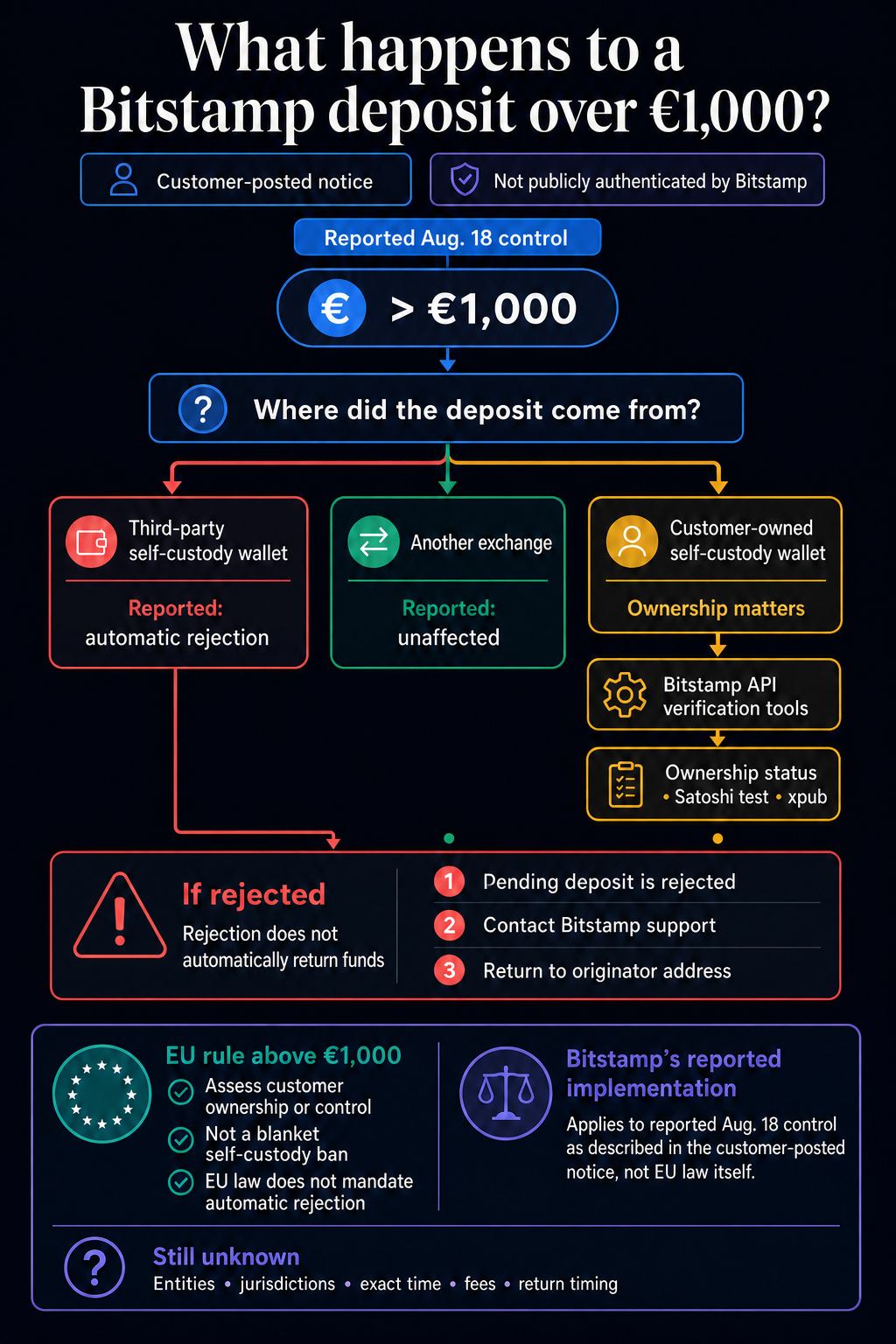
Rejection also does not reverse the blockchain transfer. Bitstamp’s API says a pending deposit can be rejected without automatically returning the assets, and the customer must contact support to have them sent back to the originator address. No public details specify the return time, possible fees, valuation method for the €1,000 threshold or whether related transfers are combined.
EU Regulation 2023/1113 requires a receiving crypto-asset service provider to assess whether its customer owns or controls a self-hosted address when a transfer from that address exceeds €1,000. For transfers missing required information, the regulation allows a risk-based response that can include requesting information, executing, rejecting, returning or suspending the transfer.

That framework does not ban self-custody or require automatic rejection of every deposit over the threshold. Based on the notice customers posted, exchange-originated deposits remain unaffected; anyone whose Bitstamp deposit enters rejection status must use support to arrange its return, while the connection between Bitstamp’s ownership checks and the Aug. 18 rule remains undisclosed.
The post Why accepting crypto payments over €1,000 on Bitstamp can reportedly freeze your assets starting tomorrow appeared first on CryptoSlate.